
What is Hydrilla?
A new urgent focus of LWC is a non-native invasive aquatic plant that, if allowed to take hold in the lake, will destroy it. There is a "red-alert" warning going out to Connecticut lake communities to be on the lookout for hydrilla, commonly known as the "world's worst aquatic invasive plant".
Hydrilla is a highly competitive aquatic invasive plant native to Korea. It exhibits explosive growth; it is capable of doubling its biomass every 10~14 days and can grow up to 191 inches per day. Rooting in the substrate, it can reach lengths of up to 30 feet, eventually forming dense, impenetrable vegetation mats at the surface. Hydrilla can survive in various freshwater bodies, can thrive in low sunlight, and can outcompete native plants in deep or murky water. Hydrilla can harbor the toxin-producing cyanobacteria Aetokthonos on its leaves, which has been shown to kill waterfowl, birds of prey, mammals, and reptiles in the southern United States.
Hydrilla grows in dense mats from the lake bottom to the surface, crowding out native vegetation, collapsing fish habitat, and making swimming, paddling, and boating difficult or impossible. The new Connecticut River genotype is especially aggressive and spreads from tiny stem fragments that can hitchhike on trailers, in live wells, or tangled in propellers. Once established, it is extraordinarily expensive and difficult to control. Prevention is the only realistic defense.
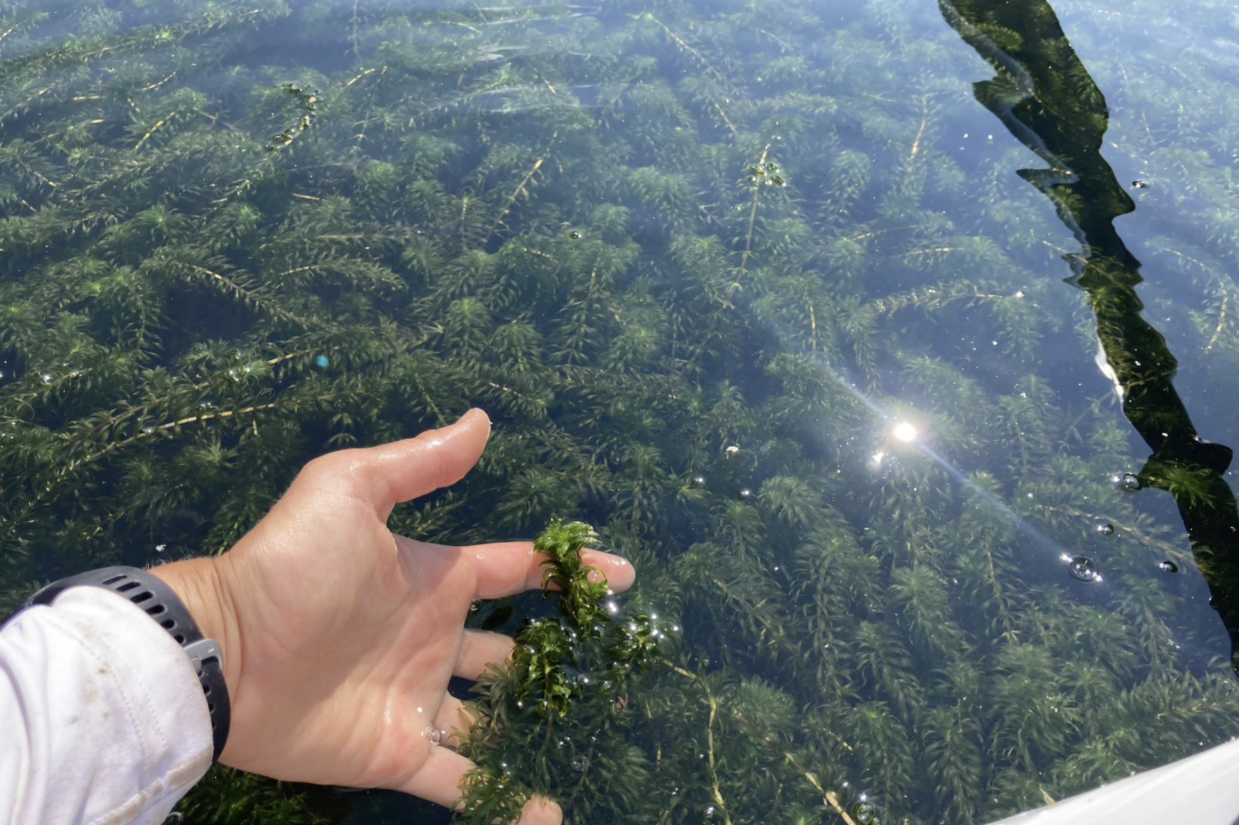
Photo courtesy of the CT River Conservancy
Impacts of Hydrilla
Creates dense mats that block sunlight & displace native plants.
Hinders boating, fishing, and swimming.
Reduces the weight and size of sportfish due to the loss of open water and native vegetation.
Causes fish die-offs by decreasing dissolved oxygen levels.
Destroys waterfowl feeding areas and fish spawning sites by crowding out plants that native wildlife need.
Hurts the local economy by impacting tourism and waterfront property values.
To better understand the impacts of Hydrilla, check out this trailer video from the CT RC&D on the impacts to the CT River:
Why is Hydrilla Such a Threat?
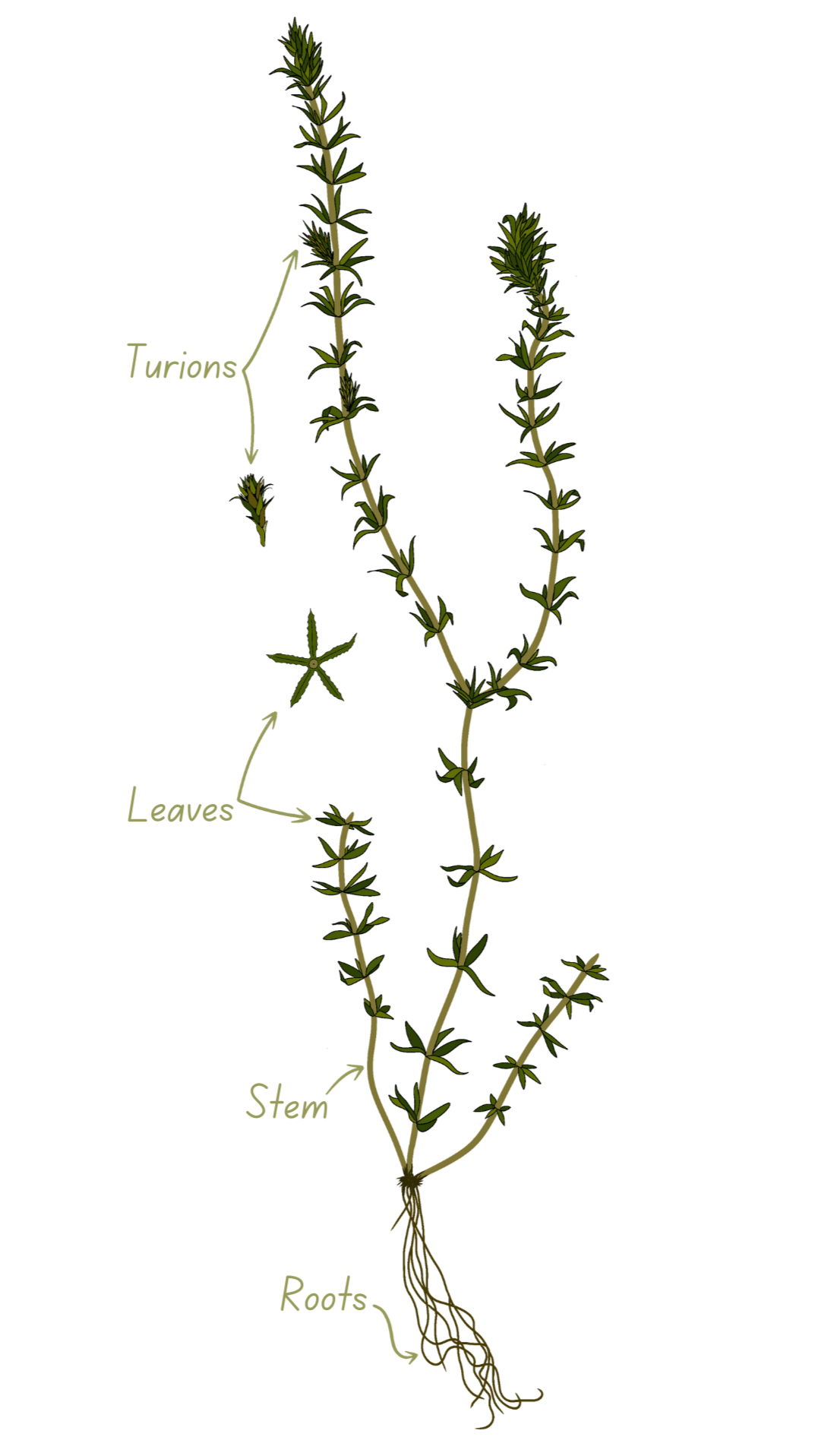
Hydrilla is extremely aggressive and spreads very easily. It propagates through four distinct mechanisms. Its most aggressive form of spreading is fragmentation -- boat propellers, wave action, storm activity, or animals can break the stem which can propagate into a new plant.
Even small fragments can independently sprout roots and shoots to establish a new colony. Therefore, cutting and mechanically harvesting plants are not effective control strategies.
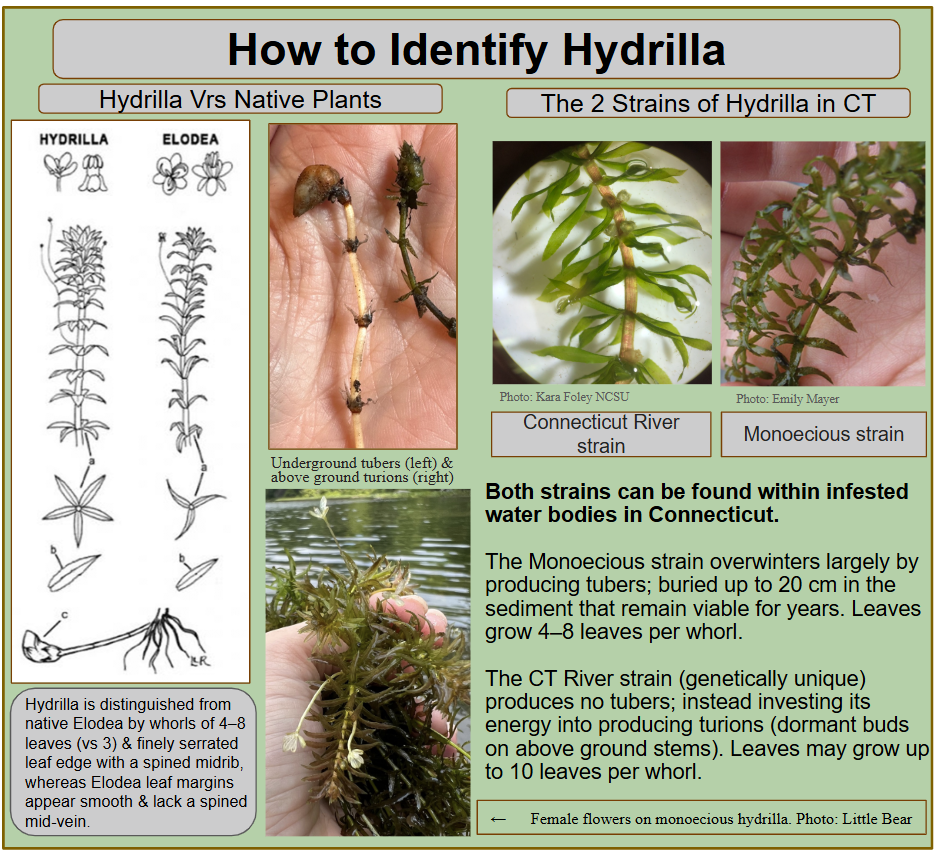
The second most effective vector is the production of axillary turions, which are dormant vegetative buds formed in the leaf axils that settle into the bottom sediment to survive the winter.
The monoecious strain utilizes tubers, starchy structures made at the root tips in the sediment. These have extreme longevity, maintaining viability for up to several years.
Hydrilla may produce male, female, or both male and female flowers on a single plant; this reproductive pathway is the least studied in the northeast infestations.
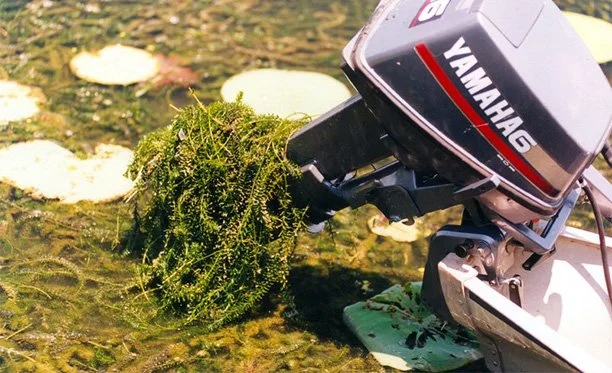
Photo courtesy of Louisiana Sea Grant
What is the Lake Waramaug Conservancy doing about it?
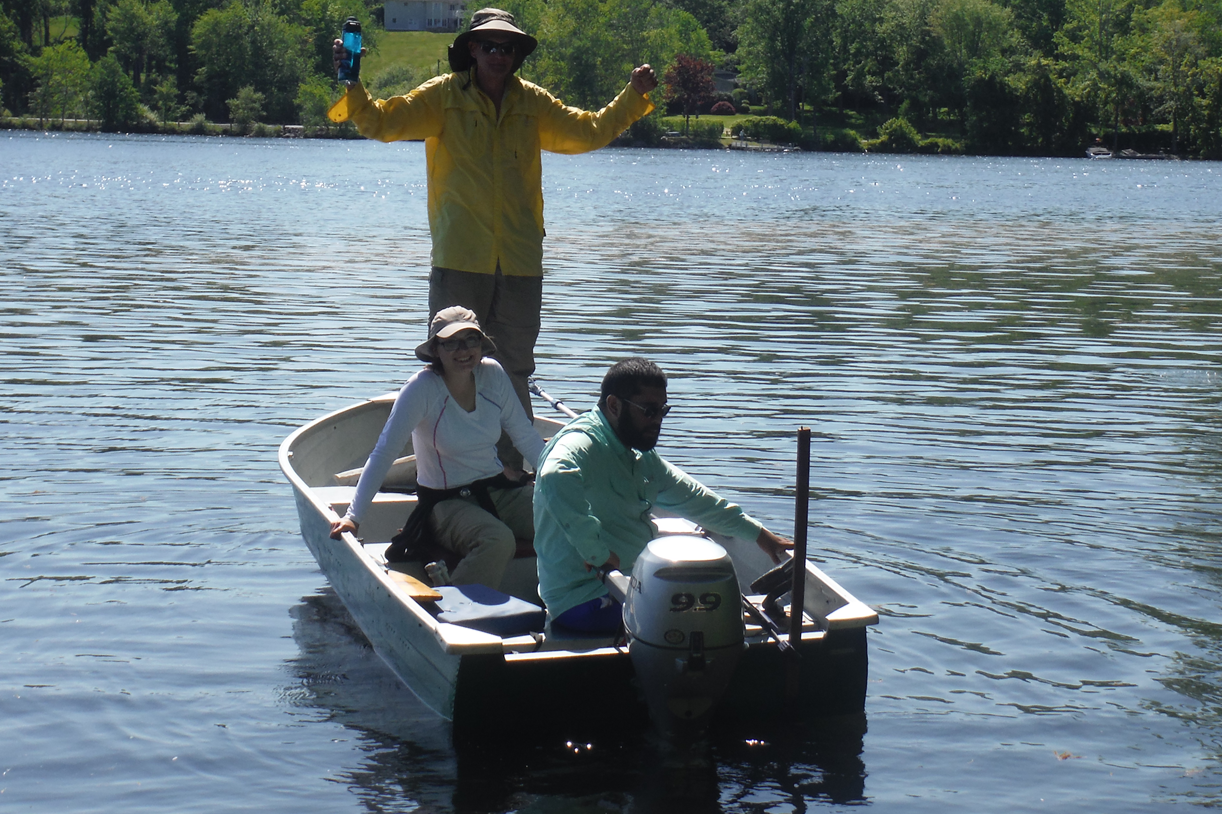
Every year we perform four rigorous shoreline vegetation surveys, slowly cruising the shoreline, mapping all the native aquatic plant populations and geo-referencing any invasive species that are spotted. If invasive species are located, we send out our suction harvest divers to pull and completely remove them from the lake.
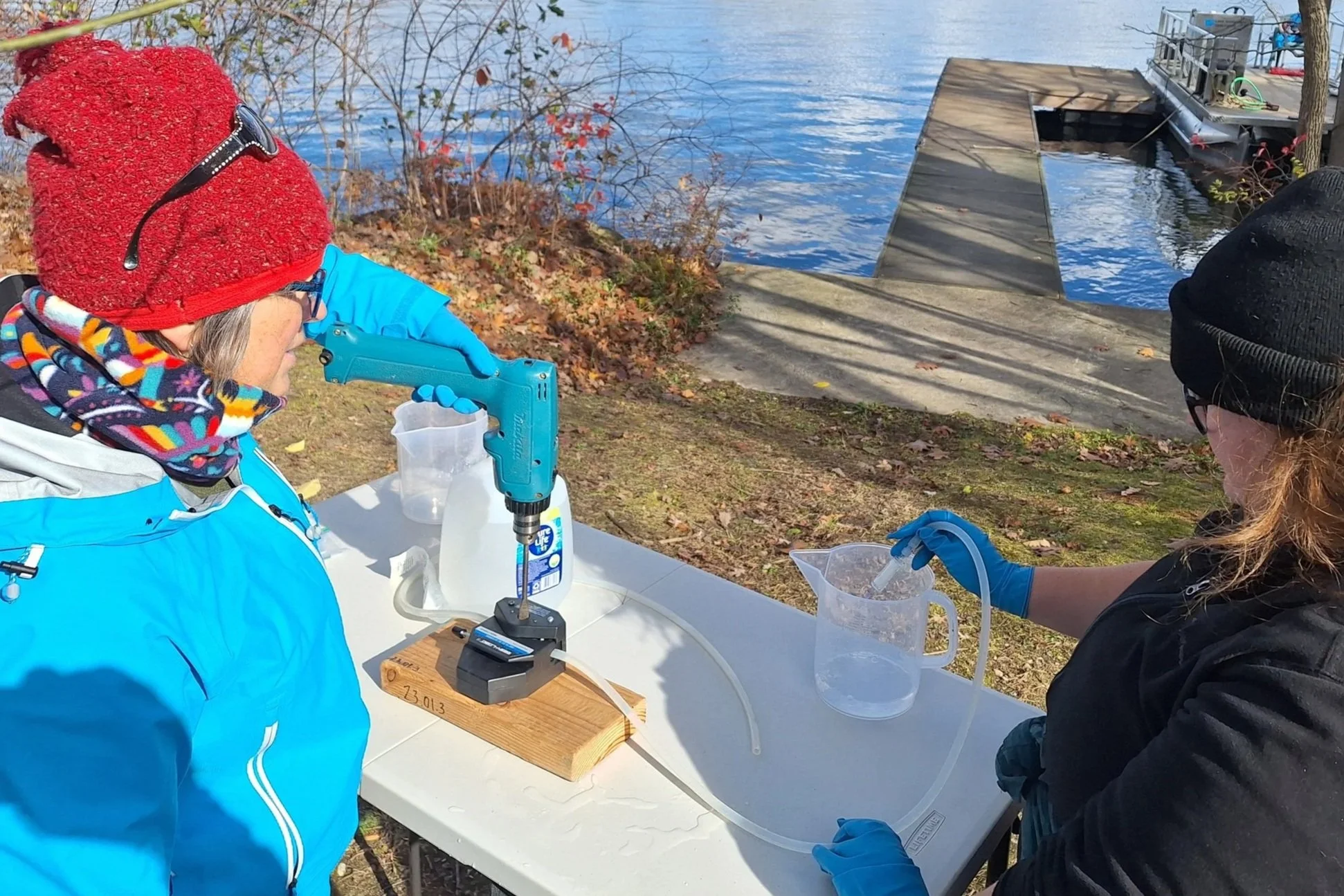
We now sample the lake water for shards of hydrilla DNA (a process referred to as eDNA sampling), pulling water samples from all the areas of the lake that have favorable habitat, filtering them to send to a lab for screening.
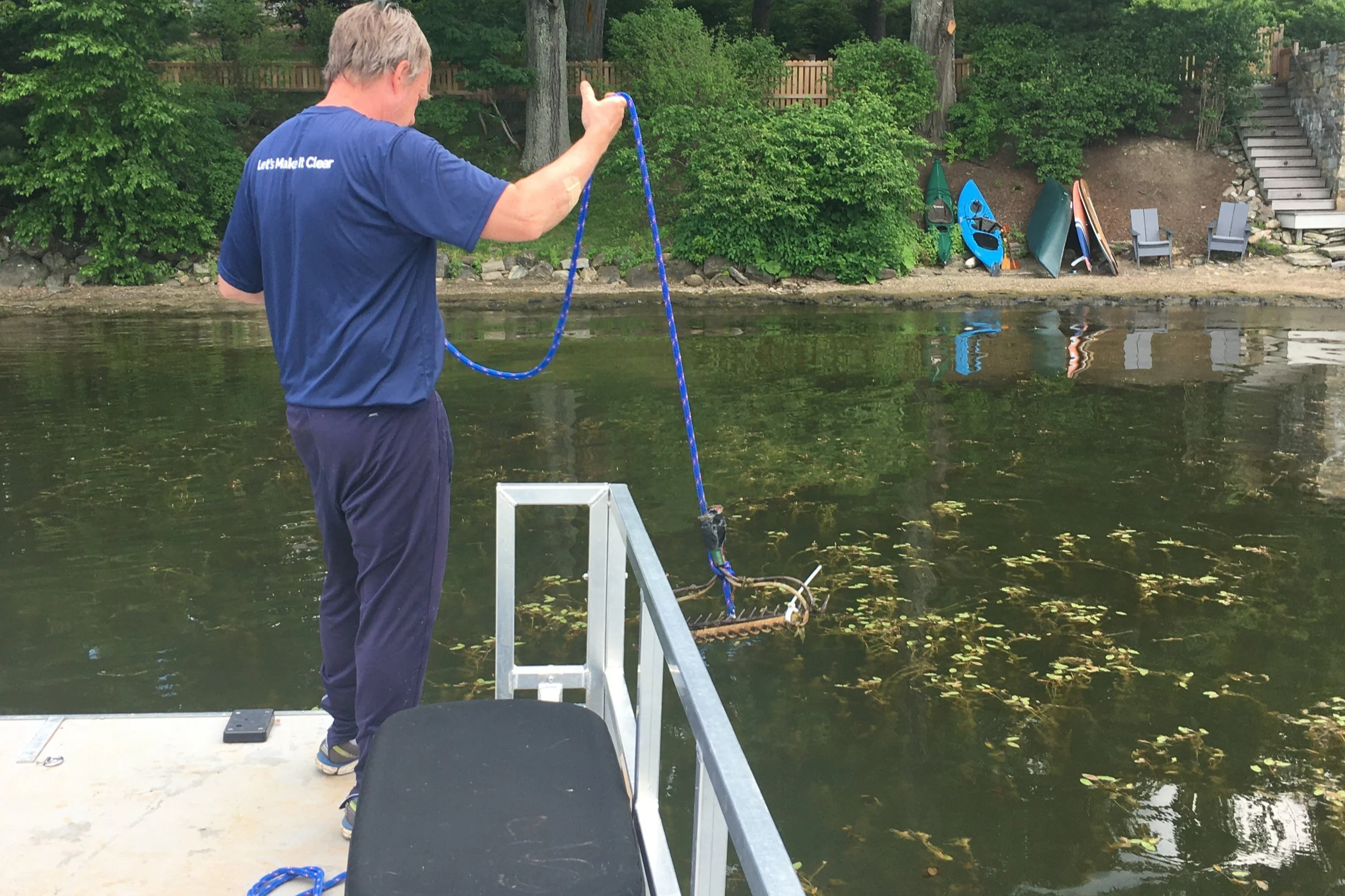
We are on call when a lakefront property owner informs us of an aquatic plant that springs up around their waterfront that they have not seen before. We use our research boat to take samples around the waterfront to identify all the plant species to verify that no invasive species are present.
We are partnering with the three Lake Towns (Warren, Washington and Kent) along with the Lake Waramaug Authority to ensure that every motorized vessel that enters Lake Waramaug is decontaminated. To learn more about Lake Waramaug Watercraft Inspection & Decontamination (WID) Program, please visit: https://www.lakewaramaug.org/decon
And more!
What Can You Do?
Photo courtesy of the CT River Conservancy
IMPORTANT TO NOTE: There are native plants that look extremely like Hydrilla in Lake Warmaug. If you see a plant you are concerned about, contact us! See the image below to better learn how to identify Hydrilla compared to friendly native aquatic plants such as Elodea spp - which we have a lot of in Lake Waramaug!
Submit photos with:
Close-up of leaves as well as the entire plant
Leaves and roots visible with an object for scale (if you have it)
Location (GPS coordinates are best, but general description or address is also acceptable)
Resources
CT RC&D Video: Invading the CT River – The Spread of Hydrilla
Connecticut River Conservancy: What is Hydrilla
CT Army Corps of Engineers
Michigan Department of Environmental Quality Fact Sheet: Heading Off Hydrilla
US Army Corps of Engineers Fact Sheet: CT River Hydrilla
Norwalk CT Fact Sheet: Invasive Plant Fact Sheet, Hydrilla
CT Ag Experiment Station ID Booklet, Hydrilla specific page: LINK
CT Agricultural Experiment Station:CT Aquatic Invasive Species Web app
CT DEEP: General Invasive Aquatic Plants