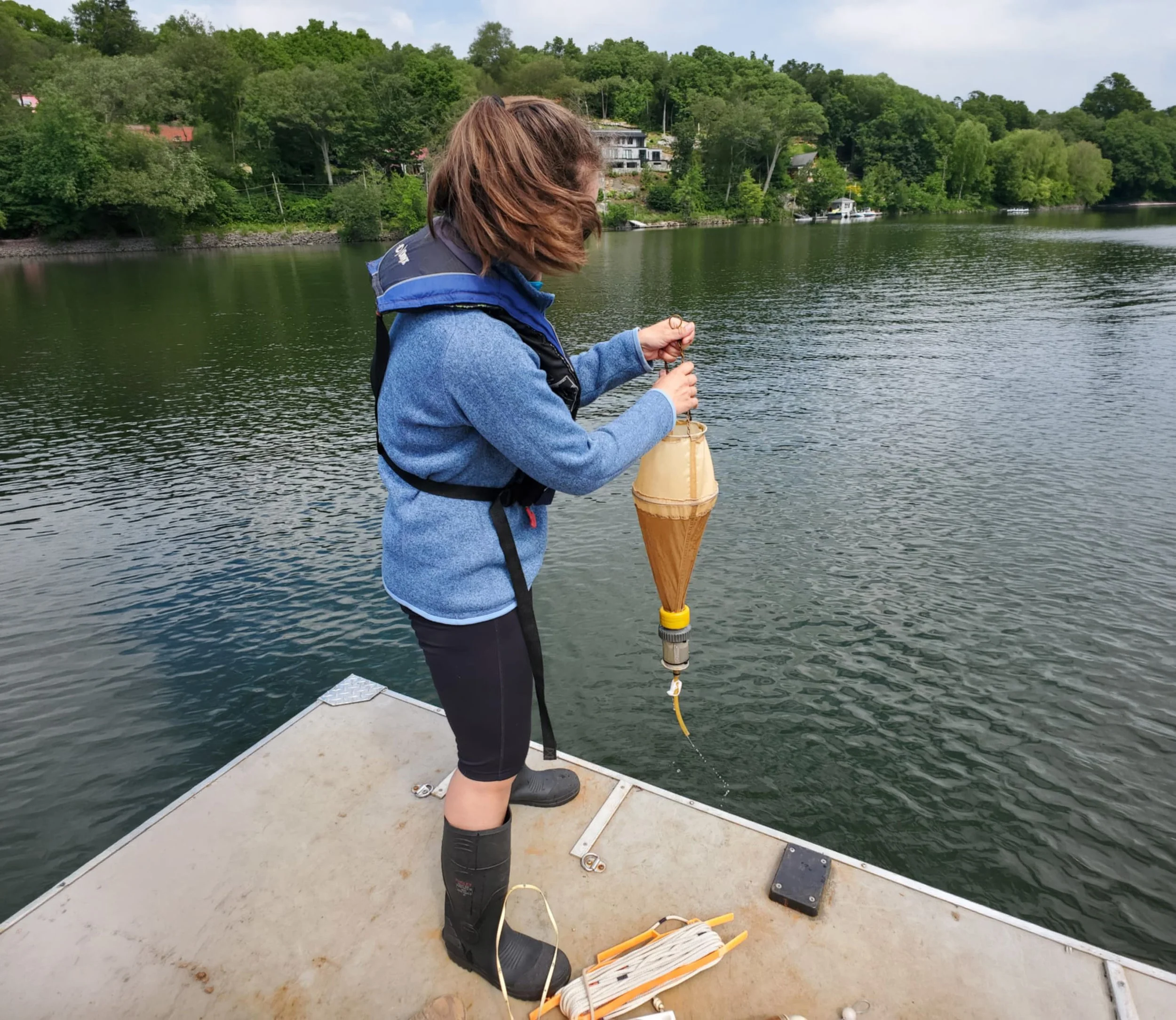
Tackling a Decline in Water Quality
The Lake Waramaug community has been reporting that the lake’s water is looking greener than usual. Several factors are contributing to this recent decline in water clarity: heat waves and moderate drought conditions, coupled with heavy downpours and strong winds. LWC’s consultant limnologists (freshwater scientists) confirm that lakes across the region are confronting similarly degraded conditions.
Short-term, LWC is implementing a modification to our in-lake layer aeration systems. The purpose of the modification is to increase the aerators’ ability to mix oxygen-rich water near the surface of the lake with cooler, oxygen-poor water from lower in the water column—growing the thickness of the lake’s middle layer (hence the name “layer aeration system”). The primary function of creating a thicker middle layer is to shrink the anoxic bottom layer where extremely high concentrations of the phosphorus that degrades the water quality are held.
About 95% of the phosphorus that is in the waters of Lake Waramaug originates from in-lake sediments. Phosphorus is naturally bound to iron in the sediments when the water above them contains enough oxygen, but when oxygen at the lake’s deeper layers is depleted, as it has been for longer stretches in recent warm summers, that binding breaks down and phosphorus is released back into the water.
The layer aeration process—shrinking the dissolved phosphorus reservoir—is key to denying harmful lake-dwelling organisms the phosphorus they need to fuel their growth. Cyanobacteria, the most harmful of these organisms, is responsible for the blue-green blooms frequently observed in distressed lakes and ponds, and some cyanobacteria strains can produce toxins harmful to people and pets.
Longer-term, the lake is under increasing pressure from rising temperatures attributable to climate change. Warmer lake water favors cyanobacteria growth, ultimately allowing cyanobacteria to outcompete all other beneficial lake organisms that work to improve water quality. The Conservancy is exploring several options, including some now being designed and field tested by our consultant limnologists.
LWC will keep the community updated on the situation, the emerging science, and any effective lake-management measures that result from our efforts.
In the meantime, homeowners can help by not applying fertilizer during summer; recent downpours do not allow time for the heavy rain to soak into dry soil, and it (along with the fertilizer) runs off lawns and into the lake. Also, do not mow lawns all the way to the lake’s edge. Leaving a buffer strip of taller grasses or vegetation will slow runoff so that it can be more readily absorbed into the soil before entering the lake.
Please feel free to contact Sean Hayden with any questions or comments you may have: seanhayden@lakewaramaug.org